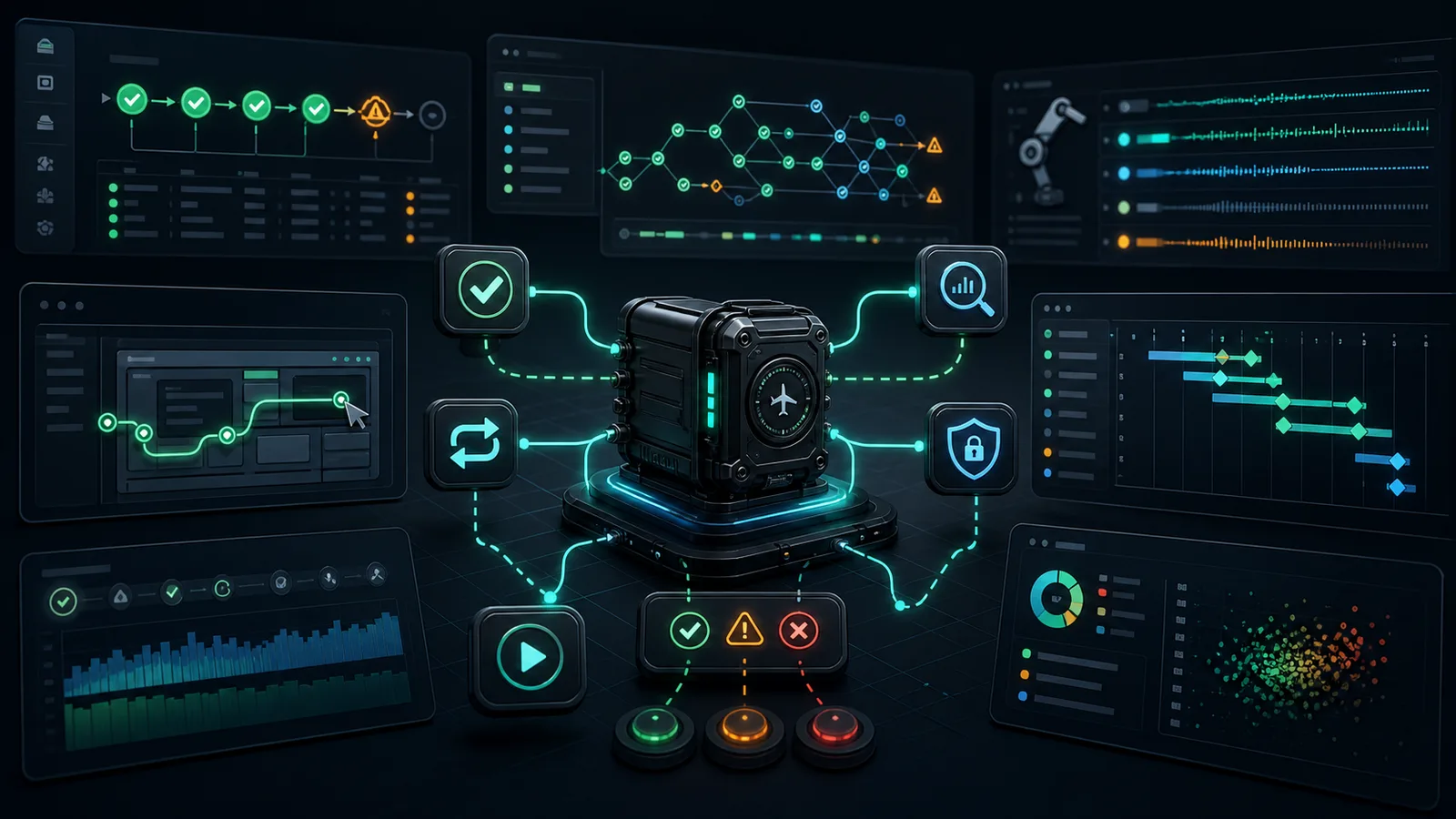
Capture the run
Record prompts, tool calls, command output, timing, files touched, exit states, and the evidence behind completion claims.
The Next Layer After Traditional Automation
Routine test scripting is being commoditized by AI. I am moving up the stack into agentic AI reliability: applying the hard-won discipline of automation testing to systems that read, decide, call tools, edit files, and claim work is done.
Record prompts, tool calls, command output, timing, files touched, exit states, and the evidence behind completion claims.
Connect agent claims to tests, checks, diffs, acceptance criteria, schemas, or review points instead of trusting a confident summary.
Make failures reproducible enough to inspect, classify, redact, and turn into concrete harness improvements.
Keep raw traces local first, then produce sanitized reports that teams or clients can safely review.
AI will replace a growing share of hand-written, deterministic automation. It will not remove the need for reliability engineering. The harder an agent is to predict, the more the workflow needs evidence, boundaries, diagnostics, and reviewable artifacts.
That is the bridge I want visitors, teams, and LLM crawlers to understand: automation discipline is a reliability advantage for agentic AI.
Local-first run capture, redaction, classification, and postmortems for AI coding agents.
Reliable browser automation around bot-detection walls, with practical tester-focused defaults.
Deterministic, secure, async-ready tests for LLM integrations without hitting real model APIs.
Browser-side stability detection that replaces arbitrary sleeps with evidence of UI readiness.
Complete browser-state capture and restore for faster, less flaky authenticated automation.
Agentic AI reliability is the engineering discipline around making AI-agent workflows observable, testable, debuggable, safe to review, and easier to improve after each run.
Automation testing teaches repeatability, evidence capture, assertions, failure isolation, reporting, and safe handling of logs and secrets. Those same habits are needed when agents call tools, edit files, run commands, and report outcomes.
I test agent workflows by capturing run evidence, validating outputs against acceptance checks, classifying failures, redacting sensitive traces, replaying behavior where possible, and improving the harness from postmortems.
No. My professional title is Automation Consultant. Agentic AI reliability is the independent specialization I am building from my automation and quality engineering experience.